
Primary ride information
Speed, odometer, trip data, ride mode and the vehicle states that need immediate attention.
Display platforms
TFT and PMVA cluster platforms shaped around clear vehicle information, EV energy data, connected features and each OEM’s visual identity.
Discuss your programme
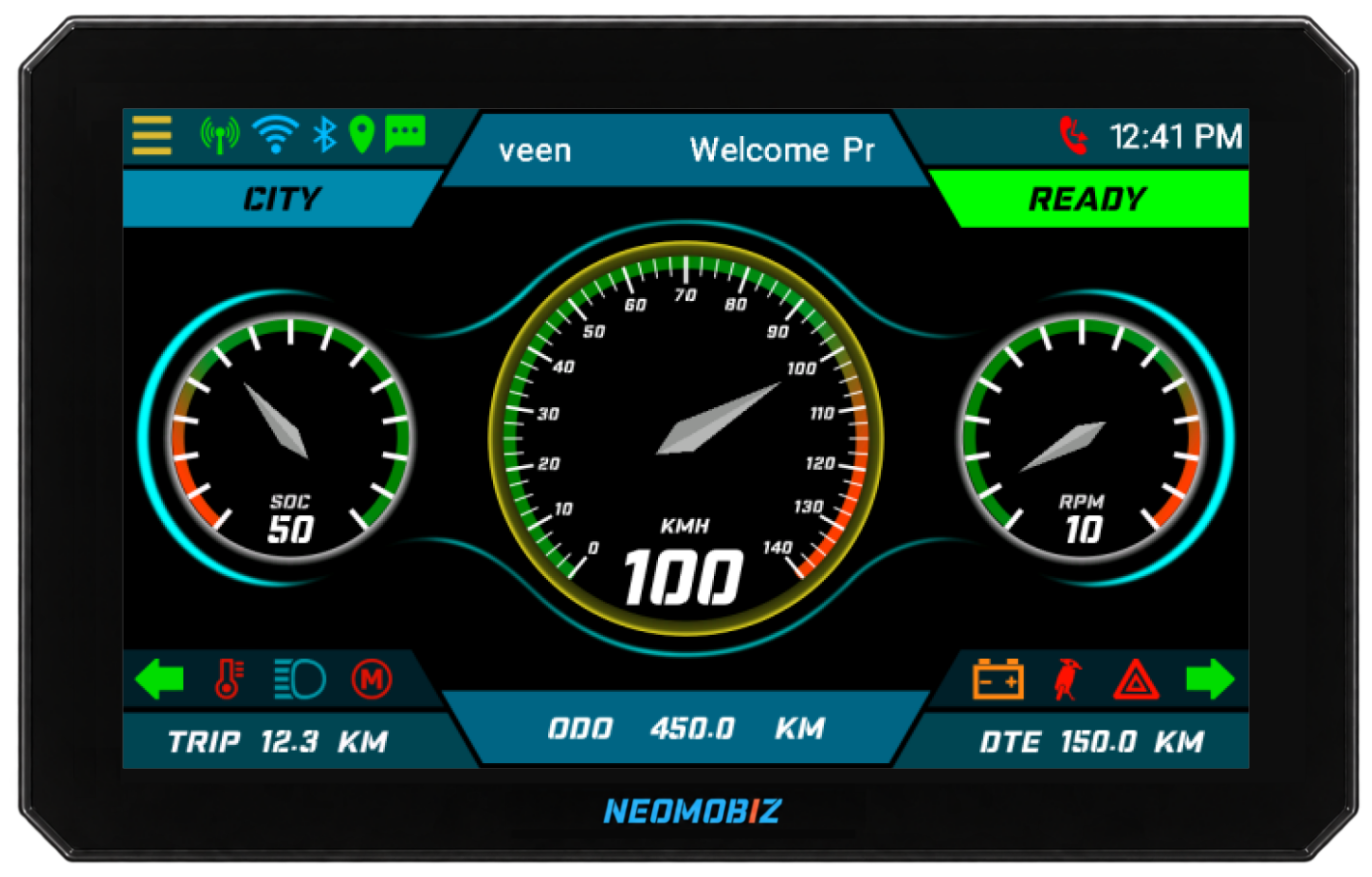
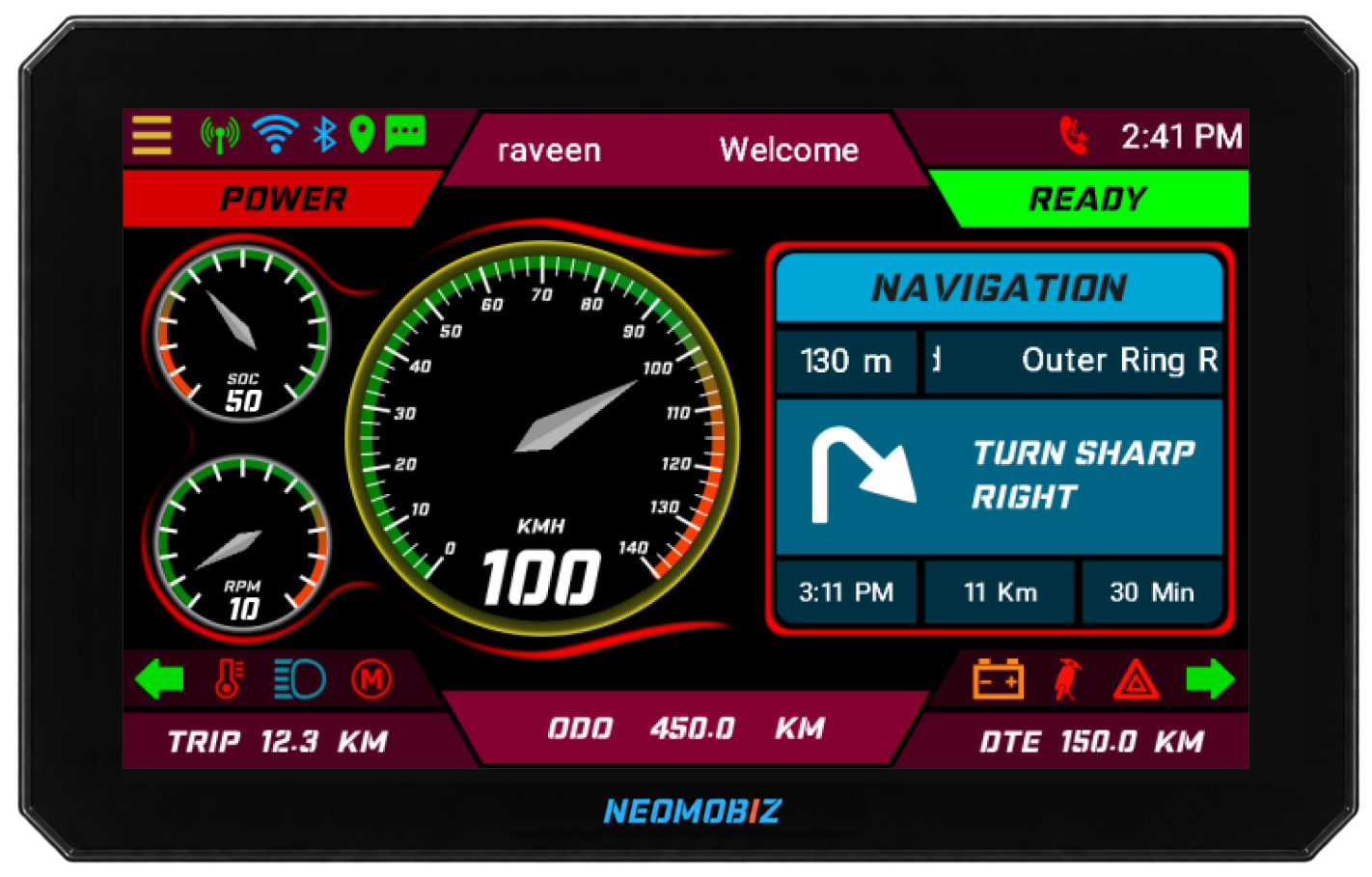
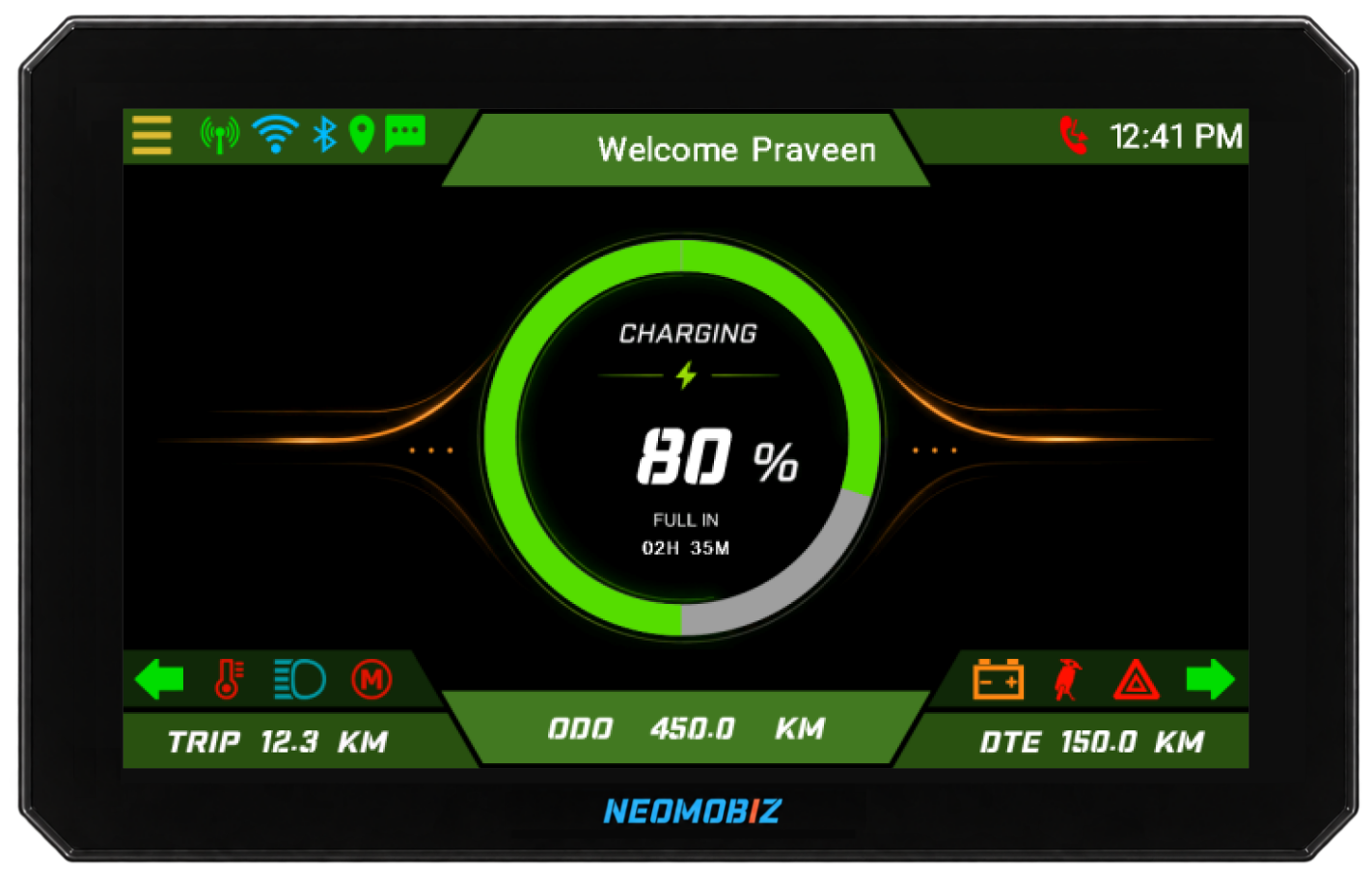
Rider information
A digital instrument cluster is the vehicle’s most immediate information surface. It has to prioritise speed, energy, range, charging, warnings and connected features without turning every available signal into visual noise.
Neomobiz structures the interface around the vehicle state and the rider’s attention. Information, telltales and alerts are mapped with the OEM rather than added as a generic screen package.
The same product language can extend into the rider application when the cluster is part of the connected platform.
Interface family
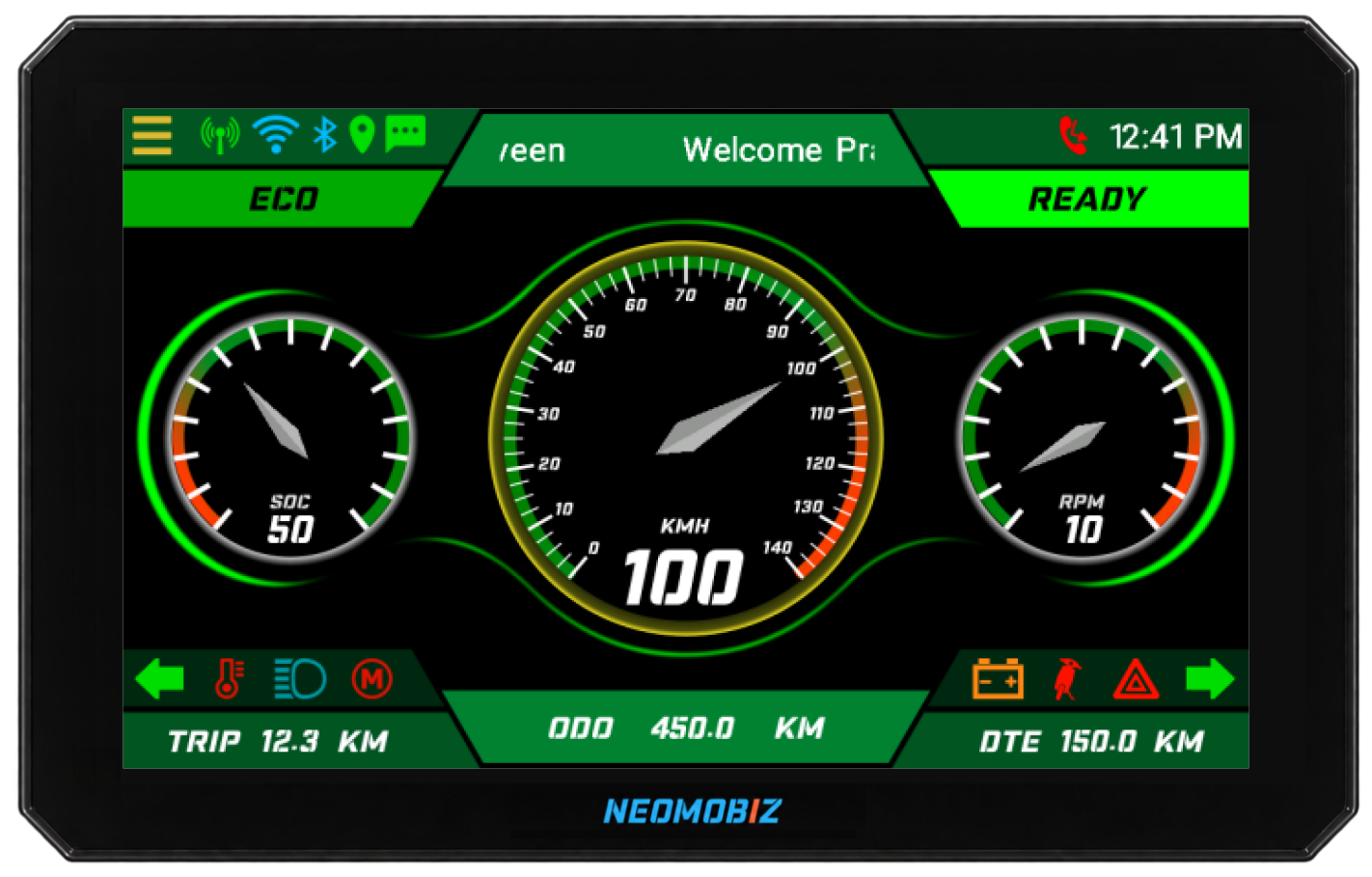
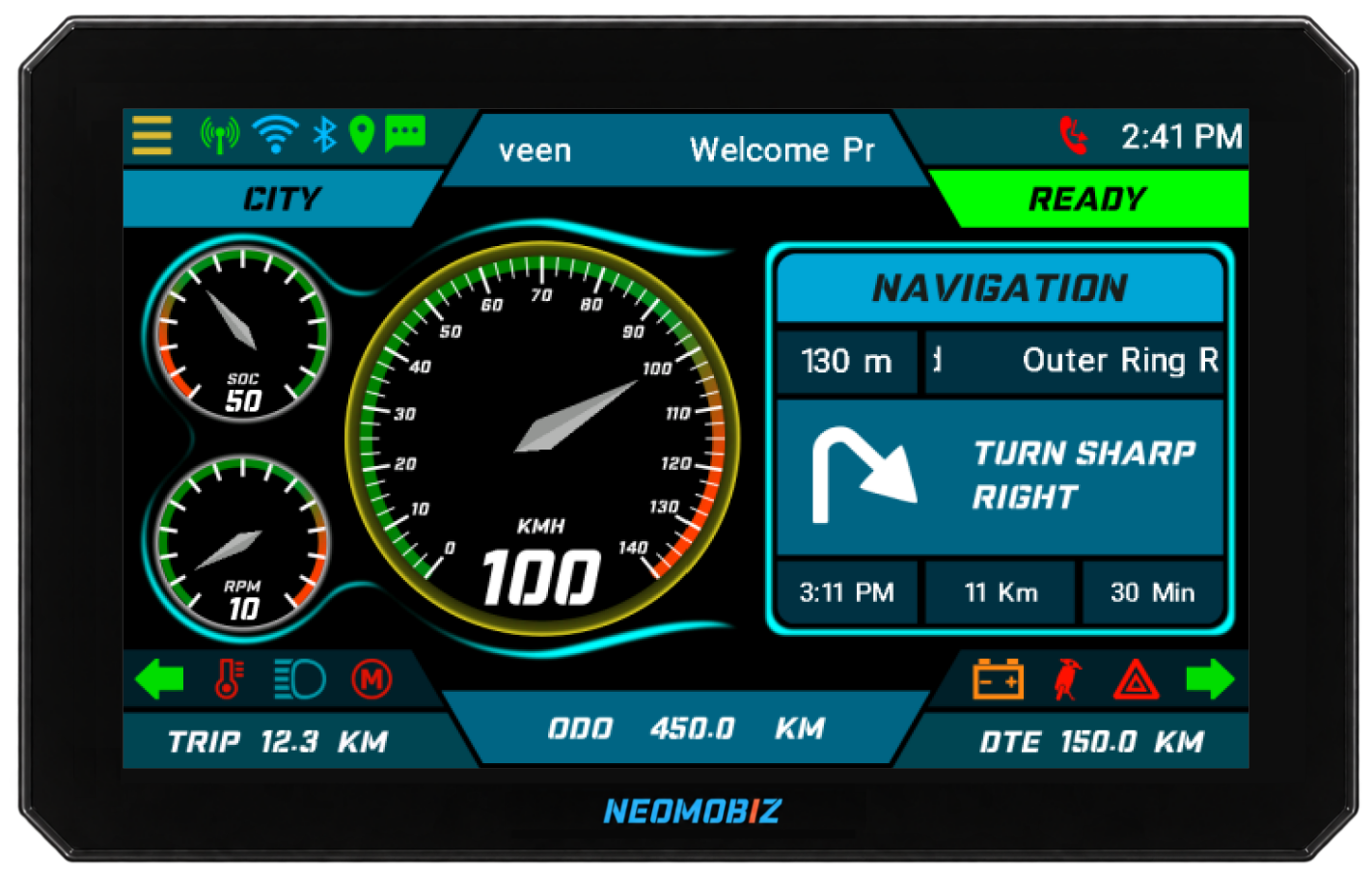
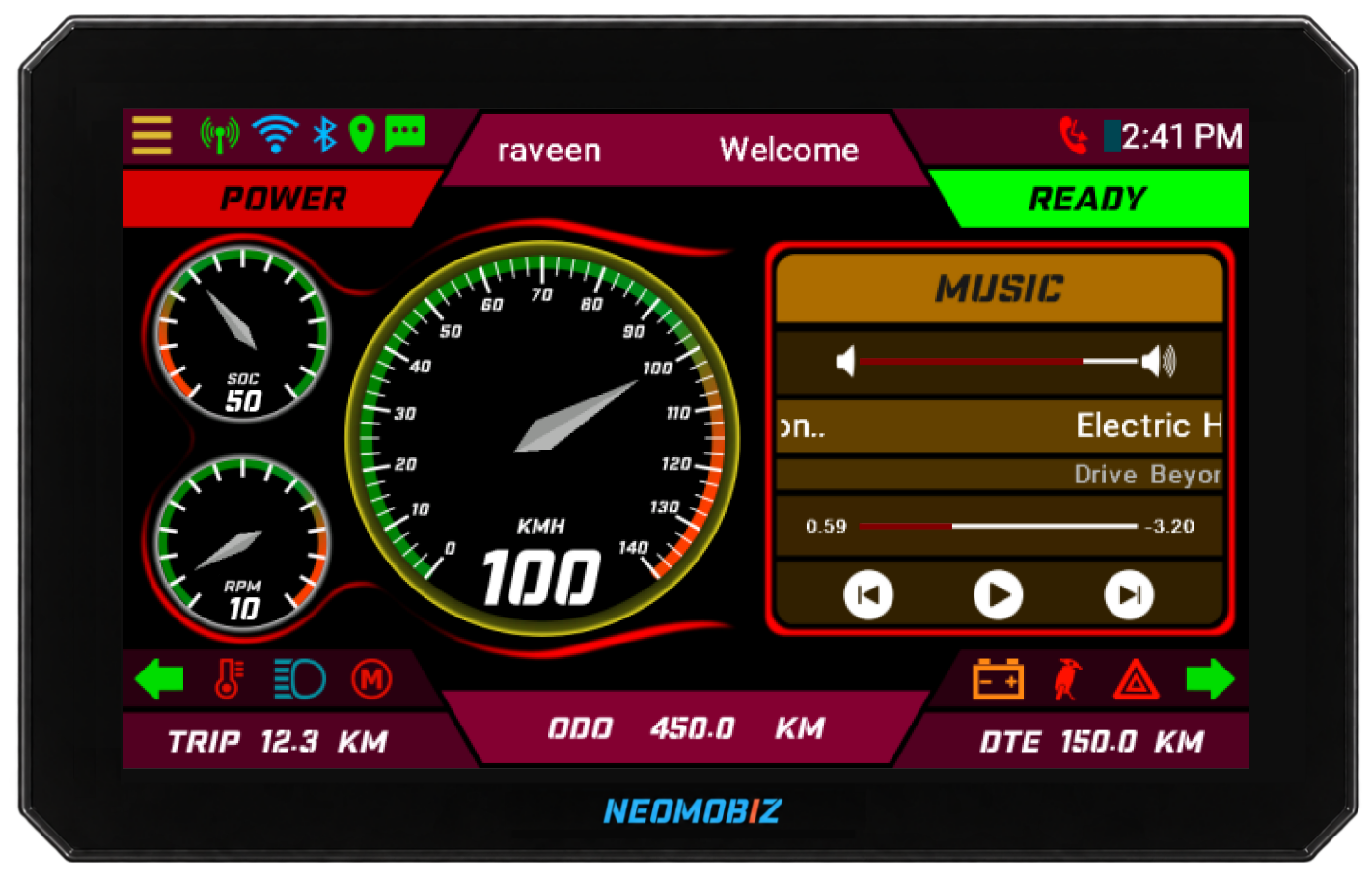
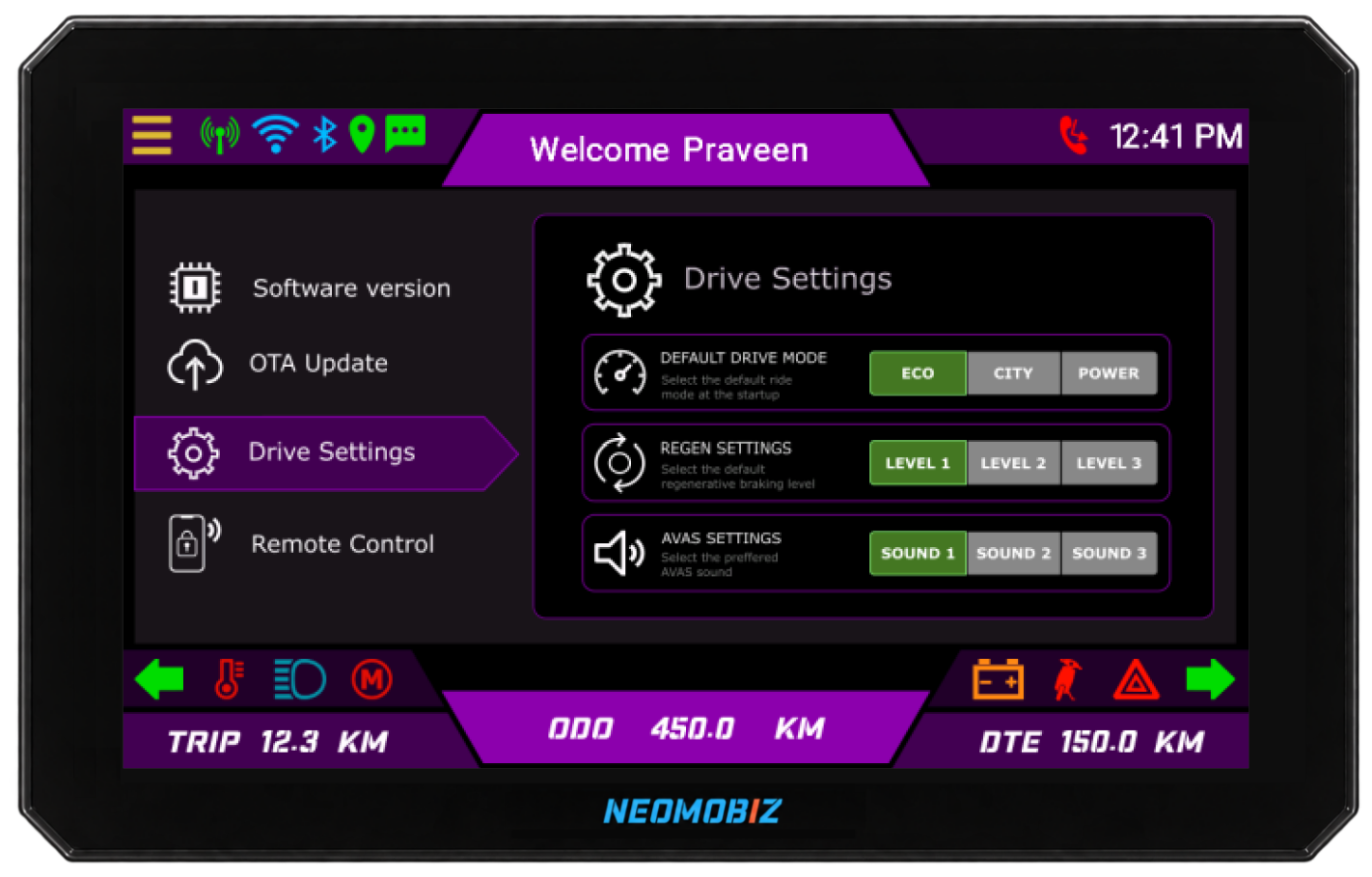
Main, music, navigation, settings and charging views can retain a consistent hierarchy while adapting to the active vehicle state.
Information architecture
Speed, odometer, trip data, ride mode and the vehicle states that need immediate attention.
State of charge, estimated range, charging state and energy-related warnings mapped from vehicle signals.
Prioritised warning, status and event indications aligned with the OEM information hierarchy.
Navigation, call or message indicators, media and other connected features where the programme requires them.
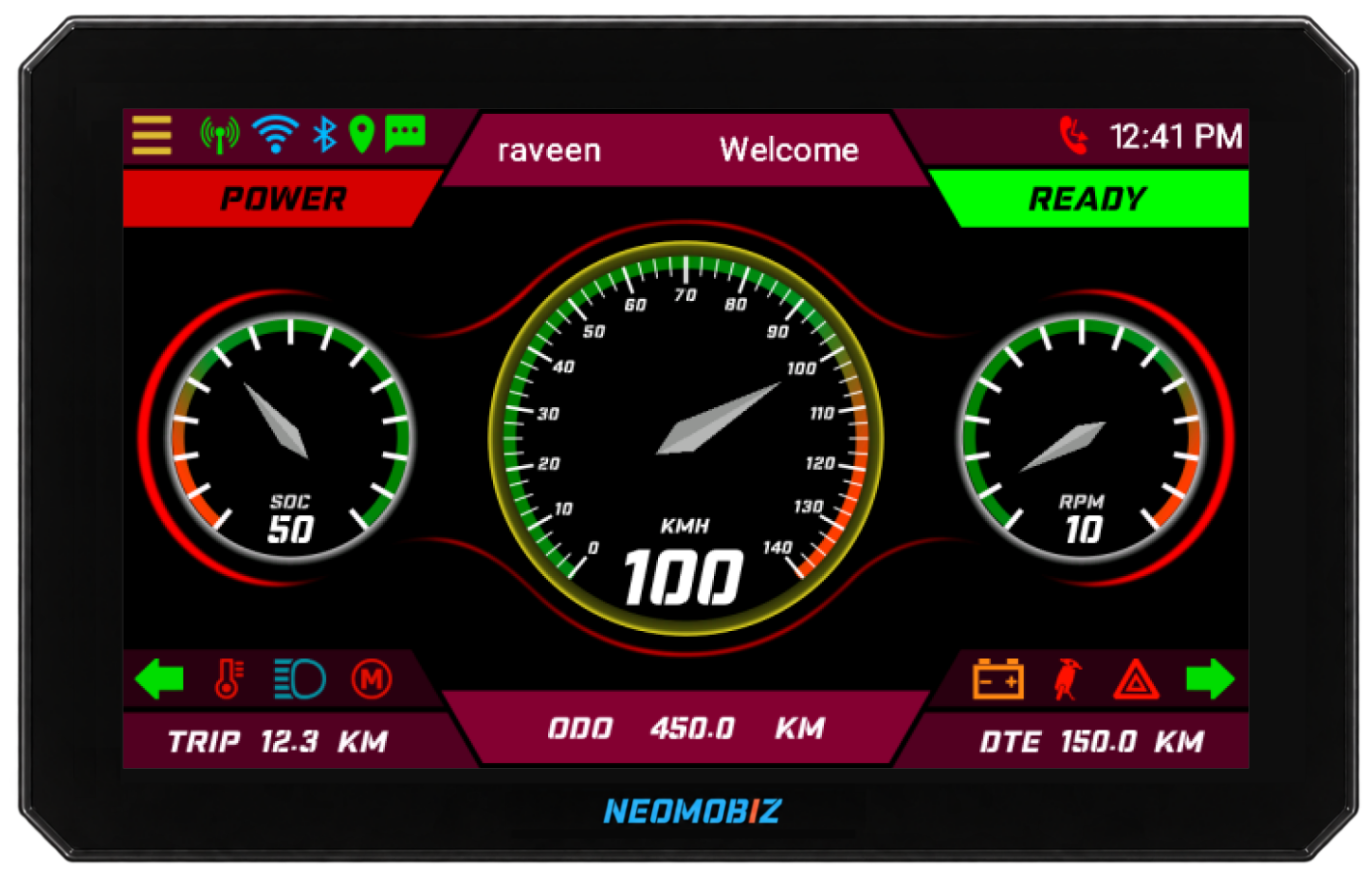
TFT supports configurable layouts, multiple ride-mode themes, navigation, media, charging views and a broader visual language. It is suited to programmes where the cluster is a central part of the product experience.
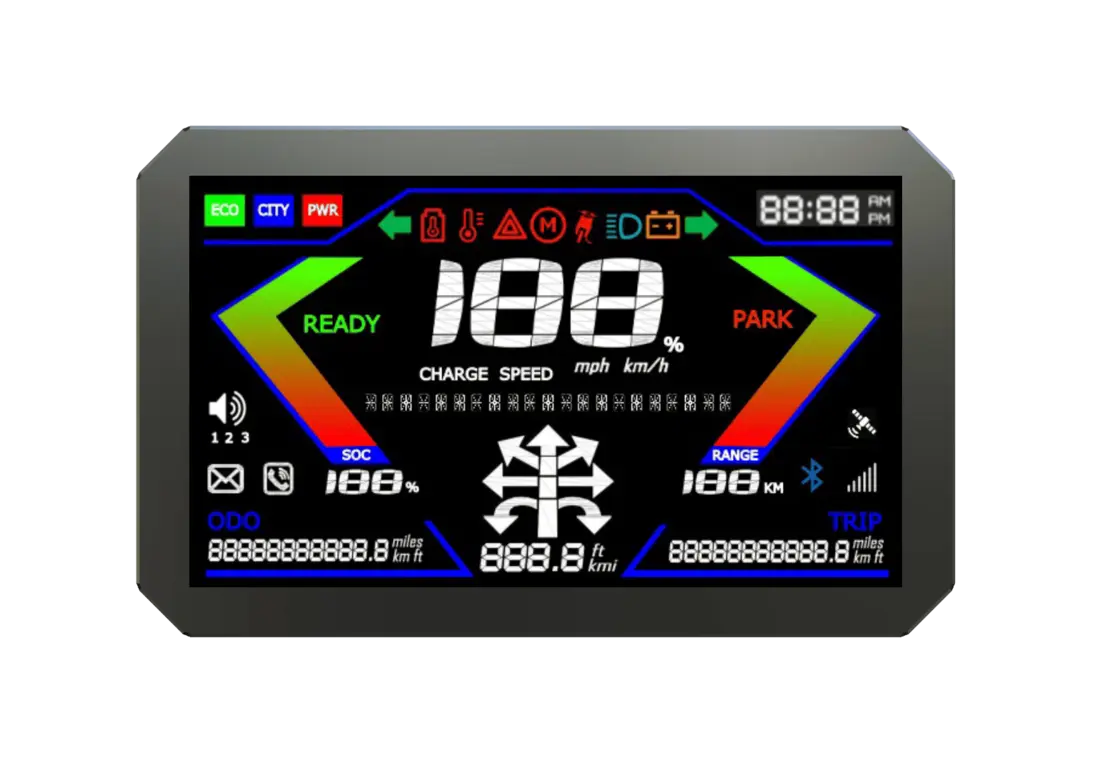
PMVA supports a segmented display direction for core ride, energy and warning information. It gives OEM teams a disciplined option where a concise information set and distinct product appearance are the priorities.
Discuss the right display directionOEM integration inputs
A productive cluster programme aligns electrical and user-interface decisions early. These inputs shape the initial Neomobiz configuration.
Technical questions
Core questions for engineering and product teams selecting a digital cluster platform.
An EV cluster can present speed, odometer and trip data, state of charge, estimated range, charging state, ride modes, telltales, warnings and connected information such as navigation or media. The exact signal set and priority rules are defined with the OEM for the vehicle programme.
A TFT cluster supports a graphics-led interface with configurable screens, themes and richer connected experiences. A PMVA cluster uses a segmented display approach suited to a focused, highly legible information set. Neomobiz supports both directions depending on the product, packaging and user-experience requirements.
Yes. The information hierarchy, visual themes, telltales, ride-mode screens, branding, CAN mapping and supported connected features can be configured for the target programme.
The cluster works with the agreed vehicle interface and CAN signal map. BLE and connected services can be included where required. Electrical interfaces, message behaviour and feature responsibilities are confirmed during integration.
Yes. It can be supplied within the Neomobiz Integrated Connected Cluster architecture, where the display works with telematics, body-control and AVAS capabilities plus mobile, cloud, fleet and OTA services.
Define the cluster
Share the display direction, CAN scope, required features and programme timeline. We’ll map an OEM-specific starting point.
Discuss an EV cluster