
01
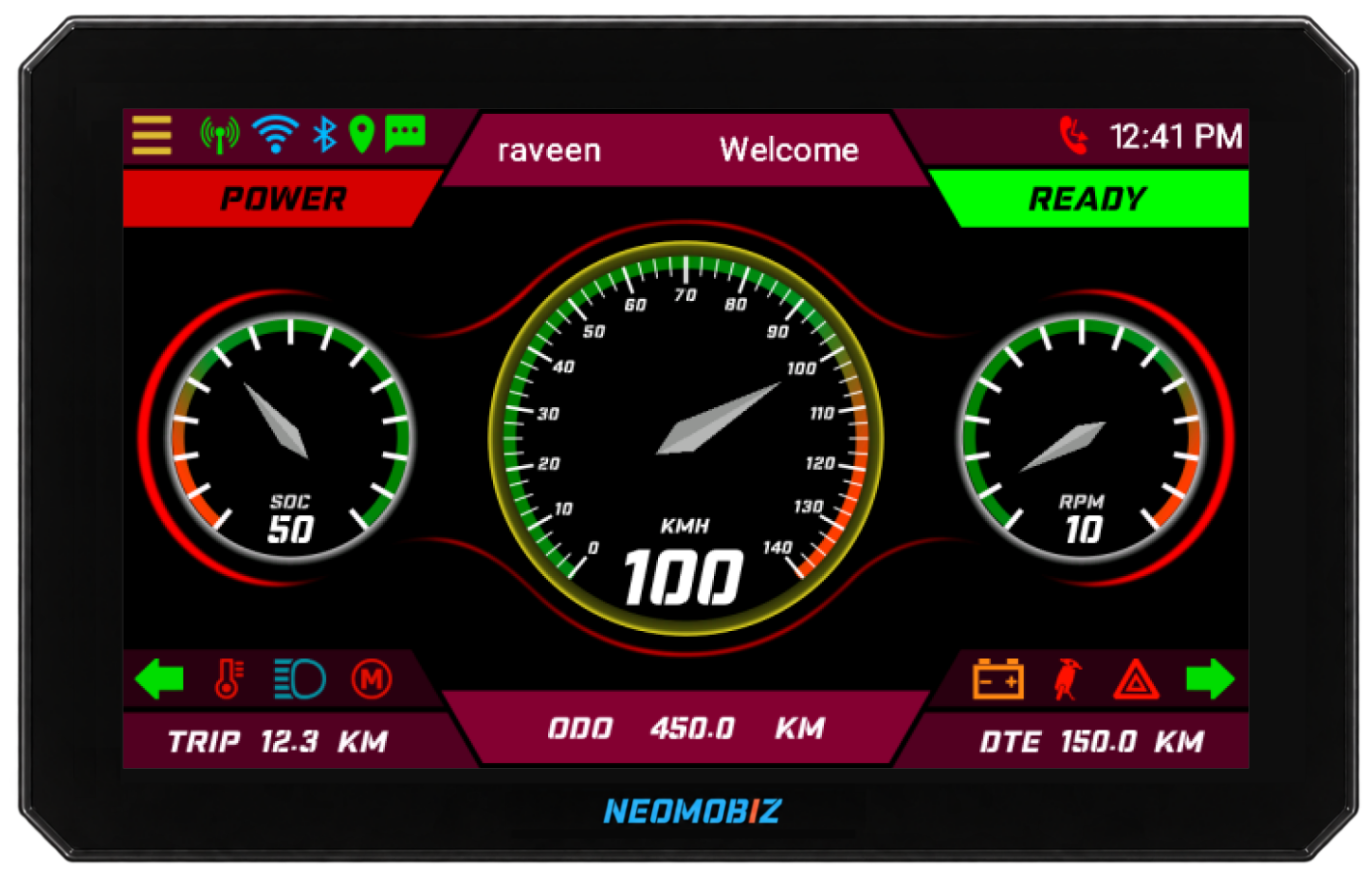
TFT instrument cluster
A configurable rider interface for speed, state of charge, range, telltales, ride modes, navigation, media, charging and vehicle settings.
Flagship vehicle platform
Bring the TFT instrument cluster, telematics, four-channel body control and AVAS into one coordinated, OEM-configurable vehicle platform.
Discuss your programme
Integrated by design
Adding a display, telematics unit, body controller and acoustic alert system as separate workstreams creates more interfaces to package, wire, configure and maintain. The Neomobiz Integrated Connected Cluster approaches those responsibilities as one connected product foundation.
It gives OEM engineering teams one place to align vehicle signals, rider information, connectivity and selected control functions, then extend the same data into mobile, cloud and fleet experiences.
The implementation remains programme-specific. Neomobiz configures the platform around the target vehicle, required functions and agreed integration boundaries.
Vehicle-side functions
Each function can be configured around the vehicle programme while remaining part of the same connected architecture.
A configurable rider interface for speed, state of charge, range, telltales, ride modes, navigation, media, charging and vehicle settings.
4G, GNSS, BLE and CAN connectivity for vehicle data, positioning, connected services, diagnostics and authorised remote features.
Four high-side control channels that can be mapped to agreed vehicle functions as part of the OEM electrical architecture.
Class-D acoustic output for configurable pedestrian awareness, reverse and vehicle-event alert sound profiles.
Connected data path
The cluster is not treated as an isolated screen. Vehicle data moves through a coordinated edge, cloud and application architecture.
CAN signals and agreed I/O connect the platform to the target vehicle architecture.
Vehicle-side processing coordinates display, connectivity, control and alert functions.
Telemetry, events, commands and firmware workflows are organised for connected operations.
Rider applications, fleet tools and OEM operations use the same vehicle foundation.
OEM configuration
The right connected cluster starts with signal definitions, user priorities and vehicle behaviour. Neomobiz works through those interfaces with the OEM team before aligning applications and cloud operations.
Discuss your vehicle architectureWhy integrate
Coordinate display, communications and selected vehicle functions earlier instead of reconciling independent modules late in the programme.
Align firmware, applications and cloud workflows around a common connected vehicle architecture.
Carry vehicle state, alerts, branding and feature logic coherently across the cluster and mobile application.
Technical questions
Answers for OEM product, engineering and sourcing teams evaluating a connected cluster platform.
An Integrated Connected Cluster is a coordinated vehicle-electronics platform that brings the instrument cluster together with connectivity and selected vehicle-control functions. The Neomobiz platform combines a TFT cluster, telematics, four-channel body control and AVAS capability, then connects that vehicle-side foundation to mobile, cloud, fleet and OTA services.
The platform is designed around electric two-wheeler and three-wheeler programmes. Display behaviour, CAN integration, connected services and control allocation are configured with the OEM for the target vehicle architecture.
It is designed to consolidate cluster, telematics, selected body-control and AVAS responsibilities into one coordinated platform. The final electrical partition, retained modules and safety boundaries depend on the vehicle requirements agreed with the OEM.
Yes. Neomobiz can configure the display information hierarchy, themes, telltales, ride-mode screens, branding and CAN signal mapping around an OEM programme. The final scope is defined during vehicle integration.
The architecture supports connected services and controlled OTA workflows. Remote vehicle actions depend on ECU support, the vehicle electrical design and explicit OEM authorisation.
Start with the vehicle
Share the target vehicle, required functions, electrical interfaces and programme timeline. We’ll identify the right starting point.
Start an OEM discussion